Product
Use Cases
How it Works
Pricing
Login

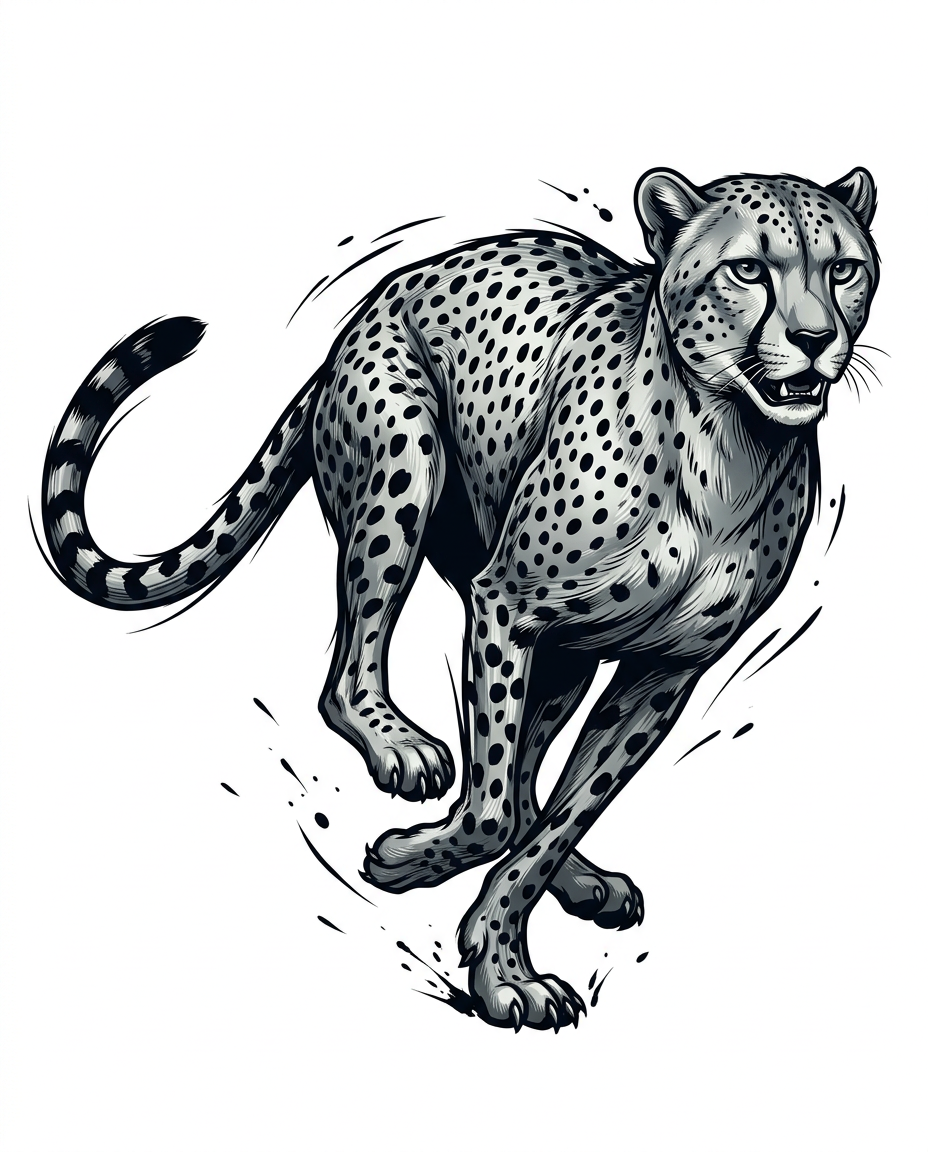
AI image design: # SILVER CHEETAH — Japanese Traditional Animal Illustration **Brand:** BIG CAT ENERGY **Product:** Silver Cheetah …
Back to community
# SILVER CHEETAH — Japanese Traditional Animal Illustration

**Brand:** BIG CAT ENERGY  
**Product:** Silver Cheetah — Instant Blend  
**Artwork type:** Standalone premium vector-style animal illustration  
**Background:** Pure solid white (#FFFFFF)

### 1. Creative Objective

Create a striking, highly detailed illustration of a cheetah in a dynamic mid-stride running pose, combining traditional Japanese woodblock-print aesthetics, expressive sumi-e ink painting, and contemporary Japanese tattoo-inspired animal illustration.

Use the three supplied reference images as the primary art direction. Follow the bold contours, expressive brushwork, flowing composition, stylized natural forms, and intricate animal markings. Translate these qualities into a sophisticated, original illustration for a premium coffee brand.

The cheetah should communicate speed, agility, precision, and controlled power. It should feel like a powerful animal captured in a fleeting moment of acceleration—not a cartoon mascot or a generic wildlife drawing.

### 2. Animal Anatomy and Pose

Illustrate a full-body cheetah in a powerful, elongated running stride, viewed from a three-quarter side angle.

The head should face slightly toward the viewer while remaining aligned with the direction of movement. The body should stretch forward with athletic tension, the shoulders and hindquarters clearly articulated, and the legs arranged in a believable running position.

The tail should extend backward and curve elegantly, creating a sweeping counter-movement that balances the composition.

Ensure:
- Anatomically accurate cheetah proportions and lean musculature.
- A relatively small head, deep chest, narrow waist, and long athletic limbs.
- Distinctive small, solid black spots distributed naturally across the body.
- The characteristic black tear lines running from the inner corners of the eyes toward the mouth.
- Rounded ears, an expressive feline muzzle, visible whiskers, and alert eyes.
- Properly articulated paws and convincing leg joints.
- A long tail with characteristic dark rings toward the tip.

The cheetah's facial expression should be focused, alert, and intense. Its mouth may be slightly open, but avoid an exaggerated snarling expression.

The anatomy must remain recognizable and biologically credible beneath the stylized illustration.

### 3. Japanese Traditional Art Direction

Reinterpret the animal through a sophisticated fusion of Japanese ukiyo-e woodblock printing, vintage Japanese animal posters, sumi-e brushwork, and bold Japanese tattoo illustration.

Use the first reference for dynamic animal composition and the expressive energy of traditional printmaking. Use the second reference for gestural ink marks, fluid motion, and the contrast between black linework and warm animal coloration. Use the third reference for confident outlines, carefully controlled spots, and ornamental movement.

Apply:
- Strong, tapered black exterior contours.
- Varied line weights inspired by hand-carved woodblock prints.
- Fine engraved strokes defining the musculature and fur direction.
- Selective crosshatching and traditional ink-like marks.
- Bold, clean shapes that remain suitable for vector conversion.
- Controlled irregularities that evoke handmade printing.
- Elegant motion lines inspired by Japanese wind motifs.

The illustration should combine traditional artistic character with modern graphic precision.

### 4. Silver and Gunmetal Palette

Develop a monochromatic metallic-inspired palette specifically for the Silver Cheetah identity.

Use:
- Deep black for the primary outlines and distinctive spots.
- Charcoal and dark gunmetal for shadows and anatomical definition.
- Cool silver and pale metallic grey for major body highlights.
- Off-white and light grey for selected illuminated areas.
- Restrained mid-grey tonal shapes to separate overlapping limbs and define form.

Keep the spots crisp, individually readable, and consistent with real cheetah markings. Do not turn them into leopard rosettes.

Suggest metallic silver through clean highlight shapes, alternating light and dark grey regions, and precise linework—not through photorealistic reflections or chrome effects.

The artwork should remain visually compelling when reproduced in a limited number of flat ink or foil colors.

### 5. Dynamic Composition

Use a tall, vertically oriented composition with the entire animal visible, including the tail and all four paws.

The body should create a strong diagonal movement through the canvas, with the head and forequarters establishing the primary focal point.

Use the curved tail and extended limbs to create a continuous visual rhythm. Preserve clean negative space around the silhouette.

Optional secondary elements may include a few stylized Japanese wind strokes, ink splashes, or restrained swirling cloud forms. Keep them sparse and secondary. Do not introduce a complete landscape, cherry blossoms, scenery, or decorative elements that obscure the animal.

The cheetah must remain the sole dominant subject.

### 6. Vector Illustration Finish

Render the final artwork as a polished, vector-style illustration with the character of a traditional Japanese print.

Use:
- Crisp, closed shapes wherever practical.
- Clean silhouette boundaries.
- Intentional line-weight variation.
- Clearly separated tonal regions.
- Intricate details that remain readable at reduced sizes.
- Minimal gradients, preferably none.
- Strong contrast against white.
- No unnecessary textures that interfere with future vector tracing.

The finished illustration should feel sophisticated, athletic, fast, and premium—appropriate for a luxury instant-coffee brand.

### 7. Output Specifications

Generate only the finished cheetah illustration.

- Full-body animal, head to tail.
- One cheetah only.
- Pure white background (#FFFFFF).
- No packaging, boxes, sachets, bags, cups, or mockups.
- No typography, logos, letters, numbers, or Japanese characters.
- No border, frame, or presentation layout.
- No photorealism, 3D rendering, or cartoon styling.
- No leopard rosettes, tiger stripes, or incorrect facial markings.
- No missing, duplicated, or malformed limbs.
- High-detail, high-resolution artwork suitable for vector refinement and premium packaging production.

**Final visual direction:** A fast, elegant cheetah rendered with Japanese printmaking character, confident black contours, intricate spotting, silver and gunmetal tones, and a fluid running pose. The result should feel like a collectible traditional animal illustration reinterpreted for a contemporary premium brand.

Community

Design detail

Elephant_1649093

Creator

@Elephant_1649093

Created October 14, 2026
Prompt

# SILVER CHEETAH — Japanese Traditional Animal Illustration **Brand:** BIG CAT ENERGY **Product:** Silver Cheetah — Instant Blend **Artwork type:** Standalone premium vector-style animal illustration **Background:** Pure solid white (#FFFFFF) ### 1. Creative Objective Create a striking, highly detailed illustration of a cheetah in a dynamic mid-stride running pose, combining traditional Japanese woodblock-print aesthetics, expressive sumi-e ink painting, and contemporary Japanese tattoo-inspired animal illustration. Use the three supplied reference images as the primary art direction. Follow the bold contours, expressive brushwork, flowing composition, stylized natural forms, and intricate animal markings. Translate these qualities into a sophisticated, original illustration for a premium coffee brand. The cheetah should communicate speed, agility, precision, and controlled power. It should feel like a powerful animal captured in a fleeting moment of acceleration—not a cartoon mascot or a generic wildlife drawing. ### 2. Animal Anatomy and Pose Illustrate a full-body cheetah in a powerful, elongated running stride, viewed from a three-quarter side angle. The head should face slightly toward the viewer while remaining aligned with the direction of movement. The body should stretch forward with athletic tension, the shoulders and hindquarters clearly articulated, and the legs arranged in a believable running position. The tail should extend backward and curve elegantly, creating a sweeping counter-movement that balances the composition. Ensure: - Anatomically accurate cheetah proportions and lean musculature. - A relatively small head, deep chest, narrow waist, and long athletic limbs. - Distinctive small, solid black spots distributed naturally across the body. - The characteristic black tear lines running from the inner corners of the eyes toward the mouth. - Rounded ears, an expressive feline muzzle, visible whiskers, and alert eyes. - Properly articulated paws and convincing leg joints. - A long tail with characteristic dark rings toward the tip. The cheetah's facial expression should be focused, alert, and intense. Its mouth may be slightly open, but avoid an exaggerated snarling expression. The anatomy must remain recognizable and biologically credible beneath the stylized illustration. ### 3. Japanese Traditional Art Direction Reinterpret the animal through a sophisticated fusion of Japanese ukiyo-e woodblock printing, vintage Japanese animal posters, sumi-e brushwork, and bold Japanese tattoo illustration. Use the first reference for dynamic animal composition and the expressive energy of traditional printmaking. Use the second reference for gestural ink marks, fluid motion, and the contrast between black linework and warm animal coloration. Use the third reference for confident outlines, carefully controlled spots, and ornamental movement. Apply: - Strong, tapered black exterior contours. - Varied line weights inspired by hand-carved woodblock prints. - Fine engraved strokes defining the musculature and fur direction. - Selective crosshatching and traditional ink-like marks. - Bold, clean shapes that remain suitable for vector conversion. - Controlled irregularities that evoke handmade printing. - Elegant motion lines inspired by Japanese wind motifs. The illustration should combine traditional artistic character with modern graphic precision. ### 4. Silver and Gunmetal Palette Develop a monochromatic metallic-inspired palette specifically for the Silver Cheetah identity. Use: - Deep black for the primary outlines and distinctive spots. - Charcoal and dark gunmetal for shadows and anatomical definition. - Cool silver and pale metallic grey for major body highlights. - Off-white and light grey for selected illuminated areas. - Restrained mid-grey tonal shapes to separate overlapping limbs and define form. Keep the spots crisp, individually readable, and consistent with real cheetah markings. Do not turn them into leopard rosettes. Suggest metallic silver through clean highlight shapes, alternating light and dark grey regions, and precise linework—not through photorealistic reflections or chrome effects. The artwork should remain visually compelling when reproduced in a limited number of flat ink or foil colors. ### 5. Dynamic Composition Use a tall, vertically oriented composition with the entire animal visible, including the tail and all four paws. The body should create a strong diagonal movement through the canvas, with the head and forequarters establishing the primary focal point. Use the curved tail and extended limbs to create a continuous visual rhythm. Preserve clean negative space around the silhouette. Optional secondary elements may include a few stylized Japanese wind strokes, ink splashes, or restrained swirling cloud forms. Keep them sparse and secondary. Do not introduce a complete landscape, cherry blossoms, scenery, or decorative elements that obscure the animal. The cheetah must remain the sole dominant subject. ### 6. Vector Illustration Finish Render the final artwork as a polished, vector-style illustration with the character of a traditional Japanese print. Use: - Crisp, closed shapes wherever practical. - Clean silhouette boundaries. - Intentional line-weight variation. - Clearly separated tonal regions. - Intricate details that remain readable at reduced sizes. - Minimal gradients, preferably none. - Strong contrast against white. - No unnecessary textures that interfere with future vector tracing. The finished illustration should feel sophisticated, athletic, fast, and premium—appropriate for a luxury instant-coffee brand. ### 7. Output Specifications Generate only the finished cheetah illustration. - Full-body animal, head to tail. - One cheetah only. - Pure white background (#FFFFFF). - No packaging, boxes, sachets, bags, cups, or mockups. - No typography, logos, letters, numbers, or Japanese characters. - No border, frame, or presentation layout. - No photorealism, 3D rendering, or cartoon styling. - No leopard rosettes, tiger stripes, or incorrect facial markings. - No missing, duplicated, or malformed limbs. - High-detail, high-resolution artwork suitable for vector refinement and premium packaging production. **Final visual direction:** A fast, elegant cheetah rendered with Japanese printmaking character, confident black contours, intricate spotting, silver and gunmetal tones, and a fluid running pose. The result should feel like a collectible traditional animal illustration reinterpreted for a contemporary premium brand.

Remix this design

Start for free with full control over models, settings, and canvas tools.

  • ·Generate with full control over models and settings
  • ·Save projects and share back to the community
  • ·No design experience required
Start free — use this prompt
Browse more community designs →
Start free — remix this

What's next?Explore more features

Hiding Elephant product features overview

Explore features

AI generation, vector tools, workflows, catalogs, and collaboration in one workspace.

How Hiding Elephant works

How it works

See how the AI canvas, automation, and teamwork fit together end to end.

Get started with Hiding Elephant

Try it free

Sign in and turn inspiration into projects you can edit, export, and share.

Go from browse to build

Explore what else the Elephant can do.You'll love it

AI image generation

AI Generation

Image tools

Image Tools

Workflow builder

Workflows

Brand and style templates

Brand Management

Product catalog

Product Catalog

Collaboration

Collaboration

Batch image generation

Batch generation

Explore community

Community workflows

The AI designworkspace forfast-moving ideas.

Product

  • Ellie
  • Apps
  • AI Generation
  • Vector Canvas
  • Image Tools
  • Workflows
  • Brand Management
  • Product Catalog
  • My Assets
  • Collaboration

Use Cases

  • E-commerce teams
  • Design agencies
  • Marketing teams
  • Content creators

Quick tools

  • All quick tools
  • Background Remover
  • Image Upscaler
  • Image Vectorizer
  • Image Optimizer
  • Image Reframer

Resources

  • About
  • Pricing
  • FAQ
  • Compare
  • Enterprise
  • Integrations
  • Explore
  • Blog
  • Case studies
  • Contact Us
  • Book a Demo
  • Affiliates

© 2026 Hiding Elephant. All rights reserved

Cookie PolicyPrivacy PolicyTerms of Service
Hiding Elephant