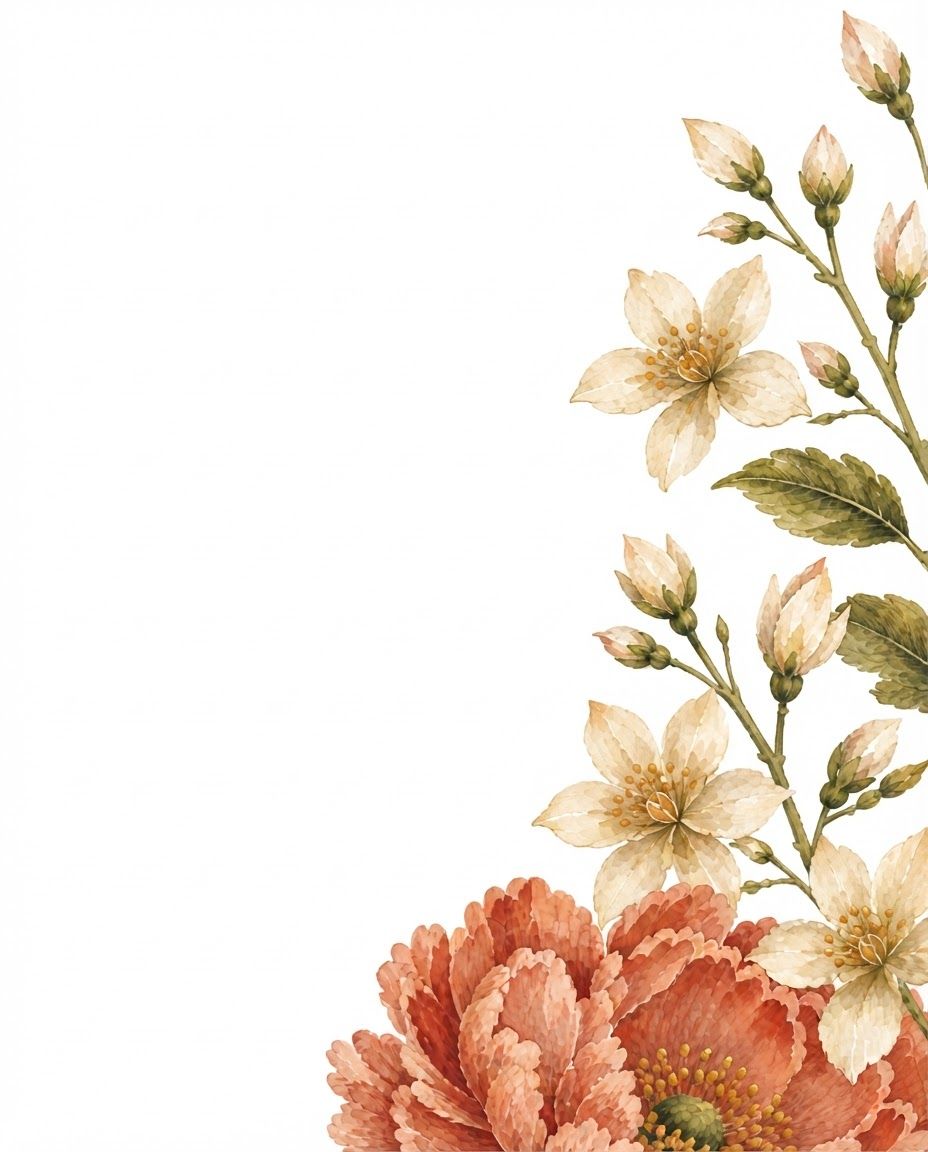
AI image design: Use the attached reference image as the primary visual and composition reference. Recreate the botanical illustration as…
Community
Design detail

Creator
@Elephant_3756952
Use the attached reference image as the primary visual and composition reference. Recreate the botanical illustration as a refined, hand-painted watercolor artwork, preserving the overall arrangement, proportions, flower placement, botanical structure, and generous white negative space of the reference while making the result feel genuinely painted by a skilled botanical watercolor artist rather than AI-generated. Create a vertical botanical watercolor composition on a completely clean white background. The floral arrangement should grow organically from the lower-right area and extend upward along the right side, with portions of stems, flowers, buds, and leaves naturally cropped by the edges of the composition. Preserve the distinctive visual rhythm of the reference: a large warm coral-peach peony-like flower occupying the lower portion, several delicate cream and ivory five-petaled blossoms with golden-orange stamens throughout the middle and upper sections, numerous unopened blush-and-cream flower buds, slender branching stems, and elongated olive-green leaves. Botanical and floral details Large coral, salmon, terracotta and dusty-peach peony-like bloom at the bottom, composed of many irregular overlapping petals. Petals should have natural variation in shape, translucency, thickness, and pigmentation. Several cream, ivory and very pale warm-beige five-petaled flowers, each with a delicate golden-orange center. Fine golden stamens should radiate naturally from the flower centers, with subtle variations rather than perfectly repetitive dots. Multiple elongated closed flower buds, predominantly ivory and pale blush with muted green sepals. Thin, naturally curved olive, moss and muted sage-green stems connecting the flowers and buds. Broad, slightly serrated botanical leaves with layered olive, ochre, and muted green watercolor washes. Maintain believable botanical anatomy while retaining the artistic looseness of traditional watercolor. Watercolor technique The most important requirement is an authentic traditional botanical watercolor appearance. Use: transparent layered watercolor washes visible individual brushstrokes subtle pigment pooling soft color bleeding at petal edges slight granulation natural paper-like watercolor texture delicate dry-brush marks translucent overlapping petals irregular pigment density imperfect hand-painted edges subtle variations in hue within every flower gentle warm-to-cool transitions fine hand-painted botanical details Avoid perfectly smooth digital gradients, vector-like edges, excessive sharpness, plastic-looking surfaces, photographic rendering, or repetitive AI patterns. Composition Keep the composition very close to the attached reference. The right side should remain visually dense while approximately the left half remains mostly empty white space. Preserve the elegant vertical movement of the stems and the layered depth created by flowers at different heights. The artwork should feel suitable for premium tea packaging, with an understated botanical heritage aesthetic. It should be elegant, delicate, artisanal, sophisticated, natural, and timeless rather than overly decorative. Color palette Use a restrained natural palette: ivory, warm cream, parchment beige, pale blush, dusty rose, coral, salmon, muted terracotta, golden ochre, olive green, moss green, sage, and muted brown. Keep colors slightly desaturated and naturally blended, with no neon colors or artificially intense saturation. Human-painted quality The final result should specifically look like an artist manually repainted an AI reference using traditional watercolor techniques. Introduce subtle asymmetry, imperfect petal shapes, varied brush pressure, natural botanical irregularities, uneven pigment distribution, and small human inconsistencies. Do not make every petal identical or mechanically symmetrical. Technical output High-resolution vertical botanical illustration, isolated on a pure white background, clean edges suitable for packaging artwork, highly detailed watercolor texture, print-ready appearance, no text, no lettering, no logos, no borders, no decorative background elements. Negative prompt: photorealistic flowers, digital painting, vector illustration, flat colors, 3D rendering, glossy surfaces, artificial gradients, excessive saturation, neon colors, black outlines, ink outlines, symmetrical flowers, repetitive petals, plastic texture, CGI appearance, cluttered background, colored background, text, typography, logo, watermark.
Remix this design
Start for free with full control over models, settings, and canvas tools.
- Generate with full control over models and settings
- Save projects and share back to the community
- No design experience required
What's next?Explore more features



Go from browse to build